⚡ Key Takeaways for Busy Photographers
- Traditional Flambient provides unbeatable color fidelity and pristine window views, but demands 60–90 minutes of gear hauling on-site and 10–15 minutes of manual Photoshop pen-tool masking per photo.
- Standard Auto-HDR (Lightroom / Enfuse) is lightning-fast on-site (15–20 minutes total), but consistently creates muddy shadow halos, dirty yellow ceiling casts from 2700K lamps, and blown-out window frames.
- The 2026 Winner (AI Bracket Blending) eliminates the trade-off. Photographers shoot quick, unencumbered 3-to-5 shot RAW brackets on-site, while specialized neural models handle flambient-grade window pulls and mixed-Kelvin color cast removal in minutes.
Every working real estate photographer reaches the same crossroads after their first busy spring market. You either spend three hours per house carrying light stands, wireless Godox or Profoto triggers, and a speedlight from room to room—or you shoot fast brackets and spend your evening apologizing for yellow ceilings and blown-out windows.
This debate—Flambient (Flash + Ambient) versus HDR (High Dynamic Range)—is the single most argued topic on photography forums. But in 2026, the technology behind exposure processing has fundamentally changed the math.
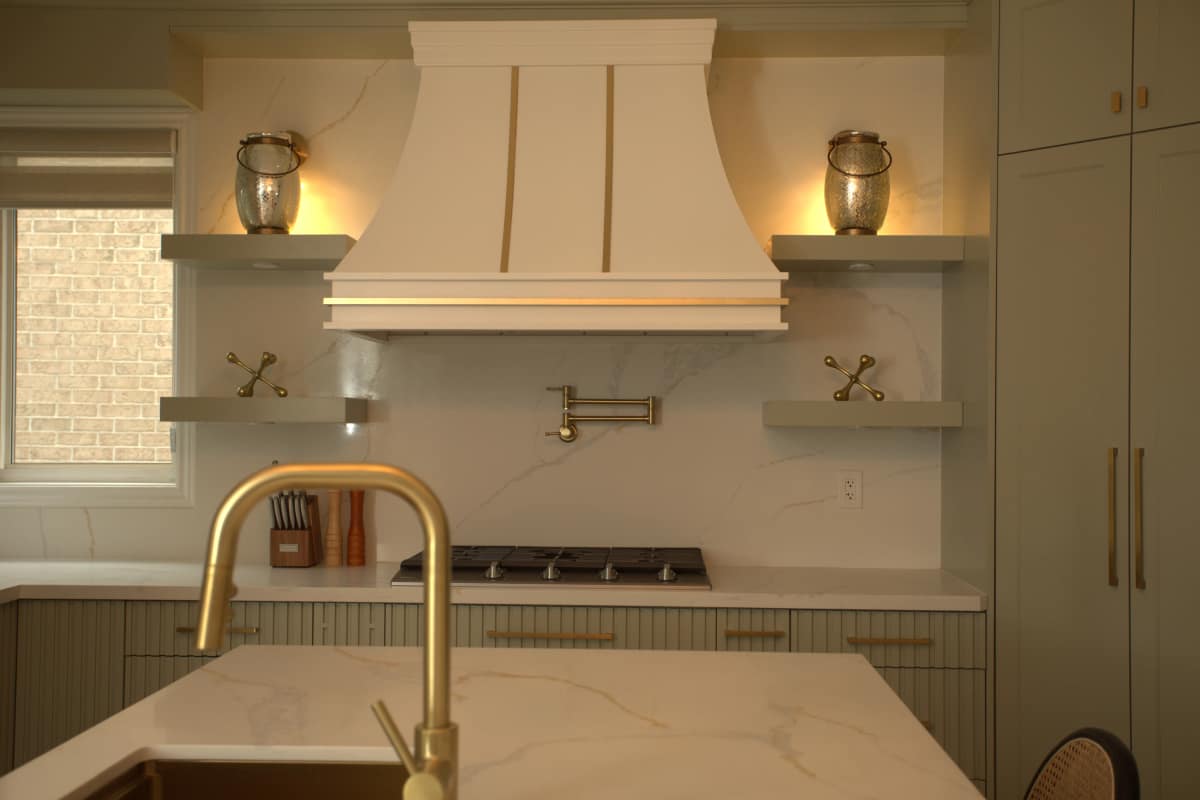
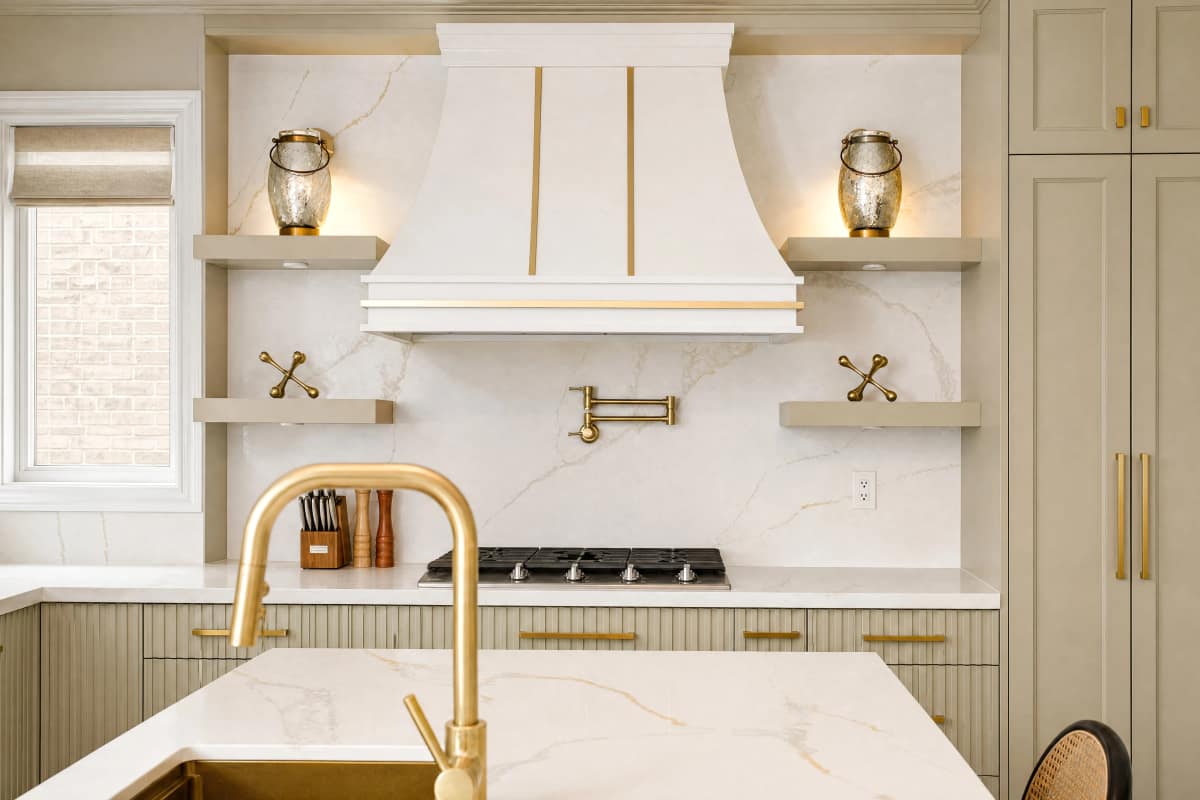
The Technical Core: Flash-Ambient vs. Pure Brackets
To understand why this choice matters so much to real estate agents and clients, look at how each method captures physical photons inside a room:
1. The Flambient Workflow
Flambient requires taking at least two (and frequently three or four) separate frames from the exact same tripod position:
- The Ambient Frame: Exposed for the room's natural interior lighting, capturing ambient room ambiance, soft shadows, and warm fixture glows.
- The Flash Frame: Exposed 1–2 stops under ambient, bouncing a powerful off-camera flash (usually 200W to 400W) off the ceiling or rear wall. This overwhelms interior light fixtures with 5600K daylight, instantly neutralizing yellow/orange color casts and illuminating dark walls.
- The Window Pull Frame: Exposed directly for the exterior landscape outside the window, popping the flash directly at the window frame to cut through glare and reflections.
In post-production, the photographer imports all layers into Adobe Photoshop, sets the Flash frame to Luminosity or Color blend modes, manually brushes in ambient warmth around lamps, and masks the window pull using a 50% opacity brush.
2. The HDR Workflow
HDR requires no lights, no flash triggers, and no modifier stands. The photographer mounts the camera on a sturdy tripod, sets auto-exposure bracketing (AEB), and fires 3 to 5 frames in rapid sequence (typically at -2, 0, and +2 EV).
Those RAW files are merged via tonal mapping algorithms (such as Lightroom HDR Merge or Photomatix) which compress the high dynamic range into a single viewable 8-bit or 16-bit file.
Side-by-Side Comparison: Time, Gear, and Output
| Factor | Traditional Flambient | Traditional Auto-HDR | AI Bracket Blending (2026) |
|---|---|---|---|
| On-Site Shoot Time (3,000 sq ft) | 60 – 90 mins Slow | 18 – 25 mins Fast | 18 – 25 mins Fast |
| Required Gear | Camera, tripod, 2x AD200/V1 flashes, wireless trigger, light stands Heavy | Camera, lens, lightweight tripod Minimal | Camera, lens, lightweight tripod Minimal |
| Color Fidelity (Whites & Walls) | 98% Accurate (Flash overpower) Superior | 65% (Mixed Kelvin yellow/green casts) Poor | 96% (Neural color separation) Near Flambient |
| Window Pull Quality | Crisp, glare-free, manual mask Pristine | Milky or dark halo outline Unreliable | Clean glass edge segmentation Automated |
| Post-Processing Time / Frame | 8 – 15 minutes in Photoshop Painful | 1 – 2 minutes in Lightroom Moderate | Under 15 seconds per job Instant |
| Cost per Completed Photo | $1.80 – $3.50 (Overseas manual retoucher) or 3+ hours personal labor | Free (Manual DIY) to $0.80 | C$0.40 (Focal Rays AI) |
Where Traditional HDR Breaks Down in Modern Real Estate
Why do luxury listing agents consistently reject basic automated HDR? It comes down to three unavoidable physical pitfalls of tone-mapping software:
The "Radioactive Lawn" Phenomenon: When an algorithm merges a blown-out exterior with a dark interior, green light bouncing off outside foliage bleeds into interior window frames, turning white trim a sickly lime-yellow.
In addition to edge bleeding, traditional HDR software suffers from:
- Muddy Shadows: Instead of deep, architectural blacks that give a room dimension, tone-mapping lifts shadows uniformly, turning corners into flat grey mush.
- Dirty Ceilings: Standard recessed LED pot lights (2700K to 3000K) create intense yellow pooling on drywall. Without flash to overpower the fixture, Lightroom cannot distinguish between a painted cream wall and a white wall lit by tungsten.
- Milky Window Glare: In high-contrast rooms (e.g., looking out over a bright afternoon pool), standard brackets blow out the reflection across the glass itself, leaving a foggy haze over the exterior view.


The Real Cost of Flambient: Why Photographers Burn Out
If flambient produces superior images, why isn't every photographer using it on every listing?
Simple: The business economics don't work for 80% of residential shoots.
Consider an average mid-tier residential listing shooting 30 photos for a local Realtor paying $250:
- Shooting Flambient: 75 minutes on-site moving lights + 2.5 hours at night manually blending frames in Photoshop = 3.75 hours of skilled labor. That equates to roughly $66/hour gross revenue before accounting for driving, vehicle wear, and gear depreciation.
- Physical Friction: In furnished or occupied homes, homeowners and realtors walk through your flash frames. Mirrors reflect your speedlight on stands. Hallway corridors require firing the flash in two directions to avoid hard shadows.
- The Scalability Ceiling: You cannot shoot 4 to 5 homes a day if every shoot requires 90 minutes on-site and 100 Photoshop layers per property.
The 2026 Paradigm Shift: AI-Assisted Bracket Blending
Over the past 18 months, deep neural computer vision models trained specifically on hundreds of thousands of architectural files have unlocked what was previously thought impossible: extracting flambient-quality results directly from natural ambient brackets.
Here is what happens inside modern AI pipelines like Focal Rays:
- Architectural Semantic Segmentation: The AI identifies walls, ceilings, windows, glass, furniture, and light fixtures as distinct physical planes, rather than treating pixels as uniform luminance values.
- Selective Kelvin Neutralization: The engine isolates the yellow spill from 2700K light bulbs on drywall and ceiling textures without desaturating natural wood floors or leather furnishings.
- Intelligent Window Pulls: The algorithm extracts the high-frequency exterior detail from your underexposed (-2 EV or -3 EV) frame, aligns the perspective, and replaces the overexposed interior window pane cleanly—with natural glass edge feathering and zero manual brush strokes.
The Focal Rays Standard: Nothing invented, nothing removed. Only true physical corrections—straightened verticals, color-cast removal, and balanced exposure that honors the actual property while meeting strict MLS advertising standards.
The Photographer's Decision Guide: When to Use Which
How should you structure your business today? Here is our practical recommendation for professional real estate media companies:
- Use Pure Manual Flambient for: Commercial architectural commissions, $3M+ luxury custom estates with non-standard ceiling shapes (e.g., dark stained cedar beams that absorb flash bounces), and magazine editorial spreads where you are billing $1,000+ per shoot.
- Use AI Bracket Blending for: 90% of day-to-day MLS listings, townhomes, condos, rental properties, and investor packages. Shoot 3-to-5 shot RAW brackets in 20 minutes, upload to Focal Rays, and deliver before dinner.
- Retire Traditional Unassisted Auto-HDR: There is no longer an economic or qualitative reason to deliver flat, muddy Lightroom HDR merges when automated bracket enhancement costs as little as C$0.32 to C$0.40 per frame.
Frequently Asked Questions
Do I need to shoot in Camera RAW for AI exposure blending?
While Focal Rays handles JPEG, PNG, TIFF, and HEIC files, shooting in uncompressed Camera RAW (such as Sony .ARW, Canon .CR3, or Nikon .NEF) gives the neural engine significantly more dynamic range in the shadow and highlight data, yielding the cleanest window pulls and zero grain.
Should I use 3-shot or 5-shot bracketing?
For modern full-frame sensors with 14+ stops of dynamic range, a 3-shot bracket (-2, 0, +2 EV) is sufficient for 85% of interior rooms. For rooms with direct, bright sunlight blasting through the glass, switch to a 5-shot bracket (-4, -2, 0, +2, +4 EV) to ensure the exterior view remains fully retrievable.
Can I turn interior lights off to avoid mixed color casts?
You can, but real estate agents almost universally prefer interior lights switched ON because it makes spaces feel warm, welcoming, and lived-in. With AI bracket blending, you can leave all fixtures on; the engine will neutralize the yellow ceiling spill while retaining the warm ambiance of the lamps.
How does this compare to hiring a dedicated overseas retoucher?
Manual overseas editors typically cost between $1.50 and $2.50 per photo and require an 18 to 24-hour turnaround window. Focal Rays processes entire listing sets in 2 to 5 minutes at C$0.40 per photo, allowing you to deliver proofs to your agents on the same day as the shoot.
Shoot the bracket. We'll handle the pull.
Test Focal Rays on your toughest interior shoot. 10 free full-resolution photos, balanced lighting, and clean window pulls—with no credit card required.
Upload 10 Free Photos Inspect Before & After Samples →